Climate Justice, AI, and Technology

Canada, like the rest of the world, faces a crisis of sustainable technology and economic transition. As governments develop policy responses, they are in urgent need of empirically informed support from the academic community to integrate leading global scholarship and policy expertise within domestic decision making.
Featured Survey
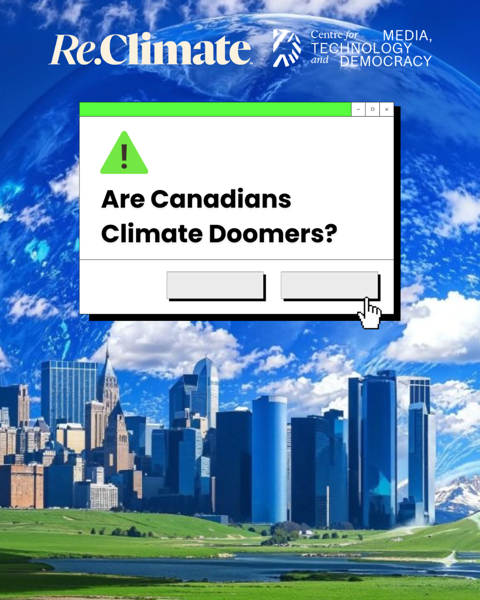
Are Canadians Climate Doomers?
December 2025
In a decade marked by historic heatwaves, fires, and floods all over the world, including a record breaking wildfire season in Canada, climate doom has become an increasingly familiar term in public debate. This “doomsday” belief that the climate crisis is already unavoidable and that action no longer matters entered a new phase of mainstream attention when a recent interview with David Suzuki appeared to signal a turn toward fatalism from one of the country’s most trusted environmental voices. Whether or not Suzuki genuinely reflects this outlook, the headline sparked nationwide conversation about how Canadians understand our climate future.
This research explores that question directly. Through a nationally representative survey, we find that 11–12% of Canadians identify as climate doomers, yet estimate the public average in Canada to be a whopping 42%. This large perception gap could suggest that the idea of widespread climate fatalism may be more prominent in our online discourse than in our actual attitudes.
Read MoreFeatured Publication
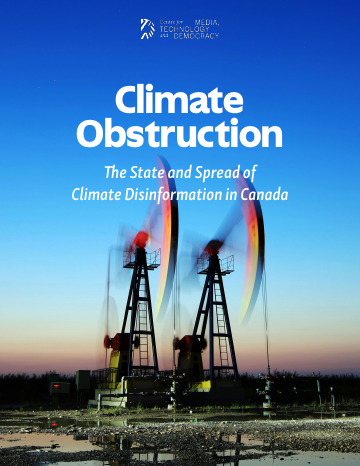
Climate Obstruction: On the State and Spread of Climate Disinformation in Canada
January 2025
While climate denial historically defined opposition to climate action, the discourse is increasingly shifting into new territory online: climate delayism. These delay tactics leverage discourses that accept the existence of climate change, but nevertheless downplay its urgency and sow doubt in potential solutions.
Read More